Plate text
The full plate number in Unicode, including national characters such as Č, Š or Ü. Lines of multi-line plates are separated by a semicolon.
Read license plates from your images with a cloud REST API. TrafficEye finds every plate in the picture and returns the plate text, issuing country or state, plate size and confidence scores as structured JSON, for 104 countries worldwide.
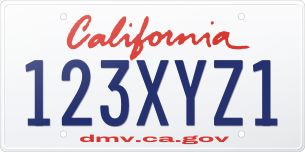
Each detected plate comes with its text, plate type and position, plus scores that tell you how much to trust the result.
The full plate number in Unicode, including national characters such as Č, Š or Ü. Lines of multi-line plates are separated by a semicolon.
The international registration code of the issuing country, with the state, province or emirate where plates differ, for example USA-CA, CDN-ON or UAE-DU.
Dangerous goods (ADR) and waste markers are returned as their own plate types, and trailer plates are marked as TRAILER, so you can handle them separately.
Every plate has an unreadable score and an occlusion score, so a dirty or covered plate does not end up in your database as a wrong plate number.
The predicted physical width and height of the plate in millimeters, which helps to tell plate formats apart, for example front and rear plates or motorcycle plates.
All four plate corners, a text score and, where the module supports it, per-character confidences for review workflows and your own quality thresholds.
Upload a JPEG or PNG image as multipart form data with your API key. The detector finds vehicles and plates in the whole scene and links every plate to its vehicle. A truck and its trailer are returned together as one combination.
roiocrModuleId# Read license plates with the European OCR module
curl -X POST https://api.trafficeye.ai/v1/recognition \
-H "apikey: YOUR_API_KEY" \
-F 'request={"tasks":["DETECTION","OCR"],"ocrModuleId":800}' \
-F "file=@car.jpg" Albania
 Andorra
 Armenia
 Austria
 Azerbaijan
 Belarus
 Belgium
 Bosnia and Herzegovina
 Bulgaria
 Croatia
 Cyprus
 Czech Republic
 Denmark
 Estonia
 Finland
 France
 Georgia
 Germany
 Gibraltar
 Greece
 Hungary
 Iceland
 Ireland
 Italy
 Jersey
 Kazakhstan
 Kosovo
 Kyrgyzstan
 Latvia
 Liechtenstein
 Lithuania
 Luxembourg
 Malta
 Moldova
 Monaco
 Montenegro
 Netherlands
 North Macedonia
 Norway
 Poland
 Portugal
 Romania
 Russia
 San Marino
 Serbia
 Slovakia
 Slovenia
 Spain
 Sweden
 Switzerland
 Turkey
 Ukraine
 United Kingdom
 Uzbekistan
 Vatican City
Includes multi-line plates, ADR (dangerous goods) plates and trailer plates.
 Argentina
 Bolivia
 Brazil
 Canadaall 13 provinces and territories
 Chile
 Colombia
 Ecuador
 Guyana
 Mexico
 Paraguay
 Peru
 Suriname
 United Statesall 50 states, DC, Puerto Rico, Guam and government plates
 Uruguay
 Venezuela
US states and Canadian provinces are returned as separate plate types, e.g. USA-CA or CDN-ON.
 Algeria
 Bahrain
 Benin
 Burkina Faso
 Egypt
 Ghana
 Israel
 Ivory Coast
 Jordan
 Kuwait
 Lebanon
 Mali
 Morocco
 Nigeria
 Oman
 Palestine
 Qatar
 Saudi Arabia
 Sudan
 Syria
 Togo
 United Arab Emiratesall 7 emirates
 Yemen
UAE plates are returned per emirate, e.g. UAE-DU for Dubai.
 Cambodiaprovince-level
 India
 Laos
 Thailandall 77 provinces
 Vietnam
Thai and Cambodian plates are returned with the issuing province.
 Australiaall 8 states and territories
Australian plates are returned per state or territory, e.g. AUS-NSW.
 Costa Rica
 Guatemala
 Jamaica
 Japan
 Singapore
These countries are read by the worldwide module 801 only, which also covers every country listed above.
The recognition works with ordinary IP, parking and mobile cameras. These guidelines from the Eyedea ANPR technical sheet help you get the highest accuracy.
At least 120 pixels per meter, which is about 60 pixels across a European license plate.
Up to ±45° is accepted, ±15° or less is recommended for the best accuracy.
Keep the plate fully inside the image with some space around it. Cropped plates lose characters.
Use a shutter speed that freezes moving vehicles. Blurred characters cannot be read reliably.
Grayscale and infrared night images are supported. Color images are needed for ADR plates.
Cameras can face the front or the rear of the vehicle, mounted on either side of the lane.
Open barriers for known vehicles and record entry and exit times.
Identify vehicles at toll points and in low-emission zones.
Log trucks and trailers at gates, including ADR plates.
Recognize returning customers and flag drive-offs.
Measure traffic flows and origin of vehicles from authorized cameras.
Open a garage or a gate when your own car arrives.
A license plate recognition (ANPR / ALPR) API takes an image, finds the license plates in it and returns the plate text, issuing country and related data as structured JSON. TrafficEye runs the recognition in the cloud, so you do not need to install or maintain any recognition software.
TrafficEye reads license plates from 104 countries in Europe, the Americas, the Middle East, Africa, Asia and Oceania, including US states, Canadian provinces, UAE emirates and Australian states. Additional countries can be added on request.
Yes. Multi-line plates are returned with the lines separated by a semicolon. ADR (dangerous goods) and waste markers are returned as the ADR and TRASH plate types, and plates on trailers are marked as TRAILER together with the country code.
Every detected plate has an unreadable score and an occlusion score from 0 to 1. Your application can handle a plate that cannot be read separately from a low-confidence reading instead of storing a wrong plate number.
For best results, the plate should be at least about 60 pixels wide for a European plate (120 pixels per meter), rotated by no more than 15 degrees, fully inside the image and free of motion blur. Color images are needed to recognize ADR plates.
Yes. Add the MMR task to the request and TrafficEye returns the vehicle category, make, model, generation, color and other attributes for the same road user as the plate.
Create an account, use your free trial credits and send your first request in minutes.